

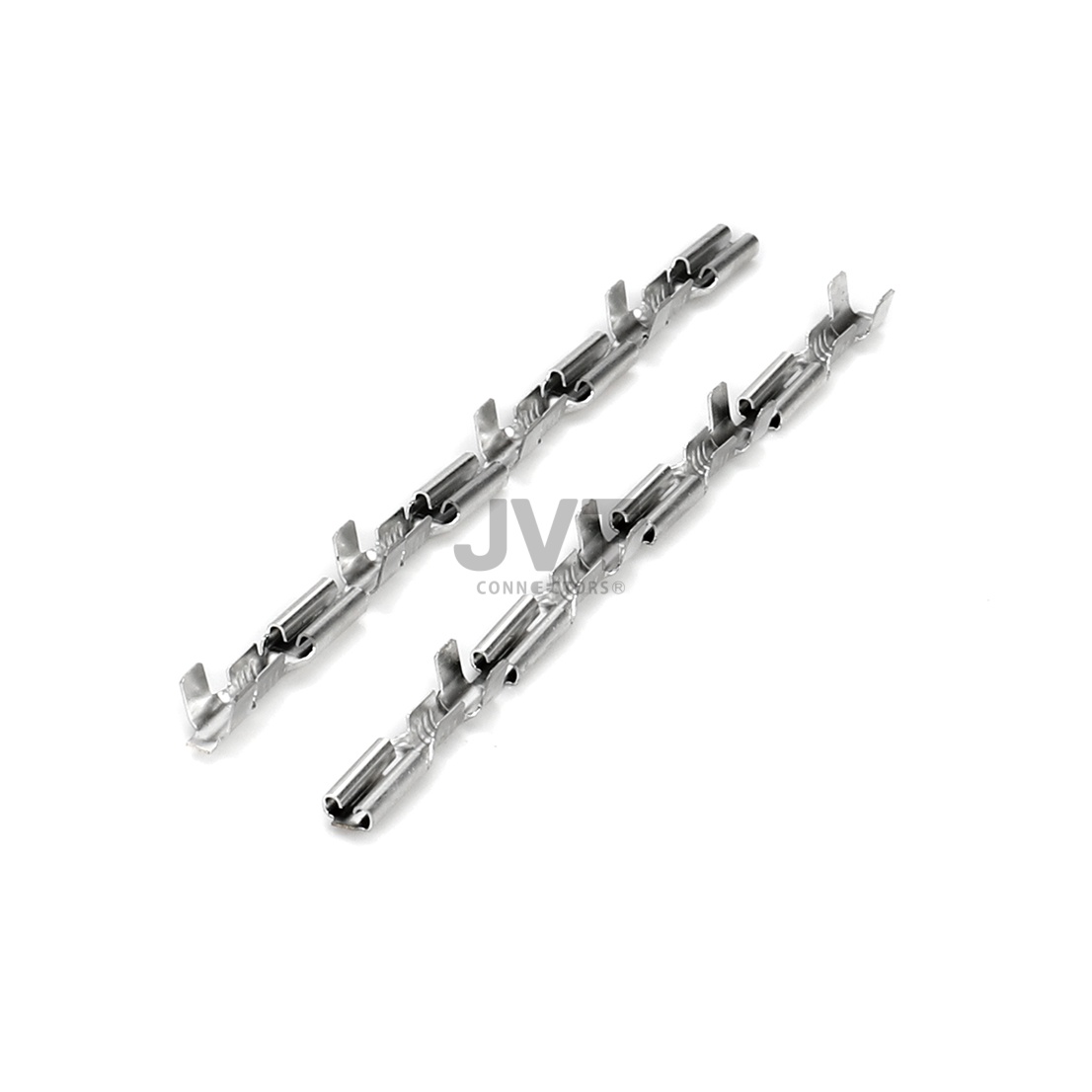
A UPS quick connect terminal is a small part of a cabinet that exists to be reliable when everything else has failed. Inside a backup power unit or a test instrument, the internal wiring distributes mains, battery, and control voltages between boards, and the terminations at those points are handled by service engineers rather than by the original production line. On a test equipment and backup power program, the customer's service department had raised a straightforward complaint: routine component replacement inside the cabinet took longer than the component swap itself, because every connection in the power path was a screw termination.
This case study explains what internal power distribution in a backup supply or instrument actually looks like, why quick connect terminations change the service economics, and what the program reported. It is written for engineers and buyers specifying internal wiring for UPS systems, test instruments, and similar cabinet-based power equipment.
What Internal Power Distribution in a UPS Requires
The wiring inside a backup power unit is not one circuit. It is several circuits with different requirements sharing one enclosure.
- Mains input and output. Terminations here carry continuous current and are the ones a technician is most careful about, which also makes them the slowest to work on.
- Battery string connections. High current at low voltage, with the additional consideration that the string may be live while the cabinet is open.
- Control and monitoring wiring. Low current signals for the controller, the display, and the communications port, usually terminated on small connectors.
- Field wiring terminals. The points where the installer brings in external circuits, which have to accept a range of wire sizes and be easy to inspect.
The service complaint on this program was about the first and fourth categories. A technician replacing a board or a fan had to open and re-torque several screw terminations, and each one carried a small risk of being left loose or cross-threaded. Every one of those operations also had to be recorded and verified, which multiplied the time cost.
Why We Moved This Cabinet to Quick Connect Terminals
The change was not about the connector rating. It was about turning a skilled adjustment into a simple mating operation.
Factory crimped harnesses inside the cabinet
We supplied harness assemblies terminated with 187 and 110 series quick connect terminals, so the internal wiring arrives as finished sub-assemblies. The production line plugs them in, and the field technician unplugs and replaces them. There is no torque specification to look up and no washer to drop.
Terminals sized to the circuit rather than to stock
The 187 series flat terminals handle the higher current internal distribution points, while the narrower 110 series covers the lower current circuits where space between terminals is limited. Using the appropriate width per circuit keeps the cabinet wiring compact without forcing every connection onto the largest terminal available.
Consistent terminations across the product range
Once the internal wiring is built from a small number of terminal types, service documentation becomes simpler and training becomes faster. A technician who has worked on one model can open another without learning a different internal wiring convention.
Interface configuration for this program
Terminal families: 187 series flat quick connect terminals for the higher current internal distribution points, and 110 series for the narrower low current circuits.
Termination method: factory crimped harness sub-assemblies replacing field screw connections inside the cabinet.
Application: internal power distribution and field wiring terminations in UPS cabinets and test instruments.
Service objective: component replacement without opening and re-torquing every connection in the power path.
What the Program Reported
The outcomes below are the ones reported for this program. They describe this cabinet design and this service organisation.
| Item | Screw terminations | Quick connect terminals |
|---|---|---|
| Component replacement time | Dominated by re-terminating connections | Reduced to unplugging and replacing sub-assemblies |
| Risk of a loose connection after service | Depends on torque being applied correctly | Removed, because there is nothing to torque |
| Internal wiring build | Wires cut and terminated at the cabinet | Pre-terminated sub-assemblies plugged in on the line |
| Service documentation | Torque values and wire schedules per model | Simplified, with fewer connection types to describe |
| Terminal width in tight areas | Fixed by the terminal block footprint | Matched to the circuit using 187 and 110 series |
The service team's summary was that the cabinet had stopped punishing them for doing a small job. That is a modest description of a change that touches every field visit, and it is the kind of improvement that shows up in a service contract rather than in a specification sheet.
Specifying Terminals for Serviceable Power Equipment
Three questions decide whether a cabinet is pleasant or painful to service. How many connections must be opened to replace the most commonly replaced component. Whether any of those connections require a torque value to be looked up and then verified. And whether the terminations can be made incorrectly by a tired technician in a dark room.
Quick connect terminals address all three. They reduce the count of operations, they remove the torque question by moving the crimp to a controlled process, and with keyed housings they make an incorrect connection physically impossible. The trade-off is that the harness has to be planned earlier, because pre-terminated sub-assemblies need to be defined before the cabinet layout is frozen. On this program the customer accepted that trade without hesitation once the service data was on the table.
Why Choose JVT as Your Long-Term Interconnect Partner?
JVT is the brand of Dongguan JVT Connectors Co., Ltd., a connector manufacturer established in Dongguan, Guangdong in 2006, with a 6,500 square metre plant and a branch in Wujiang, Jiangsu. Injection moulding, stamping, and automatic pin insertion all run in our own factory, supported by more than twenty injection moulding machines, more than twenty stamping presses, and more than fifty automatic pin insertion machines, with in-house engineering for tooling and custom terminal development. Our management systems are certified to ISO 9001, ISO 14001, IECQ QC080000, and IATF 16949, and our products are tested by UL and SGS.
Terminals are a core product line for us, not a bought-in accessory. The range includes 187, 250, and 110 quick connect terminals, soldering terminals, substrate terminals, board-in crimp terminals, direct plug terminals, and straight-through terminals, all produced on our own stamping and plating lines. Our connectors cover nineteen pitch steps from 6.35 mm to 0.60 mm and include wire-to-board, wire-to-wire, board-to-board, IDC, pin header, DC connectors, board-in terminals, and FFC/FPC families, serving automotive, industrial, power module, power tool, home appliances, consumer, computer, lithium battery 3C, low-altitude flight, and new energy applications.
For cabinet wiring in power equipment, the useful entry points are the 187 flat quick-connect terminal page, the wider quick contact terminal range, and the complete terminal series for the rest of the internal distribution wiring.
Frequently Asked Questions About the UPS Quick Connect Terminal
Why use quick connect terminals inside a UPS cabinet?
Because internal wiring is touched whenever a component is replaced. Quick connect terminations move the crimp into a controlled process and reduce the field task to unplugging and replugging, which removes both the time and the torque verification step from every service visit.
Which width should I choose, 110 or 187?
Match the terminal to the current and the available space. The 187 series is the usual choice for the higher current internal distribution points, while the narrower 110 series suits lower current circuits where terminals sit close together. Mixing widths within a cabinet is normal and keeps the wiring compact.
Are quick connect terminals suitable for mains-side connections?
They are widely used for internal distribution in power equipment, and the terminal and housing must be selected for the voltage, current, and creepage requirements of that circuit. Your product safety file determines what is acceptable, and it is worth confirming the terminal rating against it early in the design.
Does the harness have to be redesigned to make this change?
The internal harness does change, because connections that were made at the cabinet become pre-terminated sub-assemblies. That is why the decision is best taken before the cabinet layout is frozen. The benefit is a wiring build that is consistent from unit to unit and far quicker to service.
Can you supply the terminated harnesses as well as the terminals?
Yes, and it is a common arrangement for cabinet equipment. Supplying completed sub-assemblies means the crimp is made with the correct tooling under process control, and the cabinet builder receives parts that are ready to install without a termination step.
If your service engineers spend more time re-terminating wiring than replacing parts, the fix is a UPS quick connect terminal and a harness planned around it. Send us your cabinet wiring schedule and the currents per circuit, and we will propose a terminal arrangement with samples for your own assembly trial.
Open the 187 Terminal Page Send Your Wiring Schedule